
Revance Advanced Filler Options for Natural Facial Balancing
A balanced face rarely looks “filled.” It looks rested, proportional, and expressive. That is why modern injectable work has moved away from chasing one wrinkle at a time and toward facial balancing, a more thoughtful approach that considers how the cheeks, lips, chin, jawline, temples, and smile lines relate to each other.
Revance is best known in aesthetics for products designed to work with facial movement, including the RHA Collection of hyaluronic acid fillers. These fillers are often discussed in connection with natural-looking outcomes because they are made to adapt within dynamic areas of the face.
This post is informational only and does not replace an in-person consultation with a qualified medical injector. Dermal fillers are medical treatments, and the right plan depends on anatomy, goals, health history, and product availability.

What facial balancing means in modern aesthetics
Facial balancing is the art of improving proportion rather than changing identity. A well-planned filler treatment can soften one area, support another, and create better harmony across the face.
The key is restraint. A small amount of structure in the chin may make the nose appear more balanced. Subtle cheek support can reduce the visual heaviness around the lower face. A gentle lip enhancement may fit better when the chin and midface are also considered.
Facial balancing can involve several areas, such as:
Cheeks and midface support
Nasolabial folds around the smile
Marionette lines near the corners of the mouth
Chin projection and shape
Jawline definition
Lip proportion and border support
Fine lines around the mouth
The goal is not symmetry at all costs. Every face has natural asymmetry. The better goal is visual harmony, where no single feature looks overdone or disconnected from the rest of the face.
This is where product choice matters. Fillers vary in softness, flexibility, lift, and how they behave with expression. Areas that move often, such as the mouth and smile lines, need products that can integrate well with motion. Areas that need contour or support may require a firmer filler or a different placement technique.
How Revance fillers fit into facial balancing
Revance offers the RHA Collection, a family of hyaluronic acid dermal fillers. RHA stands for resilient hyaluronic acid. These fillers are designed to resemble the natural hyaluronic acid found in skin and to adapt during facial movement.
That movement-focused design is the reason many injectors consider Revance advanced filler options for facial balancing when the goal is a soft, natural-looking result.
Hyaluronic acid, often called HA, is a sugar molecule that exists naturally in the skin. In filler form, HA can add volume, improve contour, support tissue, and soften folds. HA fillers are also widely used because they can often be dissolved with hyaluronidase if clinically appropriate.
The RHA Collection includes several options, and each has a different feel and purpose. Product selection should always come from a trained provider after examining facial structure and skin quality.
Revance filler option | Common role in a treatment plan | Texture and movement profile |
RHA Redensity | Fine lines around the mouth and delicate superficial correction | Soft, flexible, and suited to subtle refinement |
RHA 2 | Dynamic wrinkles and lighter fold correction | Soft to moderate support with natural movement |
RHA 3 | Moderate facial folds and areas needing a bit more structure | More support while still adapting to expression |
RHA 4 | Deeper folds and volume support in selected areas | Firmer support for contour and lift |
The FDA-cleared indications for these products are specific, and providers may discuss other uses based on training, anatomy, and clinical judgment. Many facial balancing plans include areas where filler use may be considered off-label. That does not automatically mean unsafe or unusual, but it does mean the consultation should be clear, informed, and personalized.
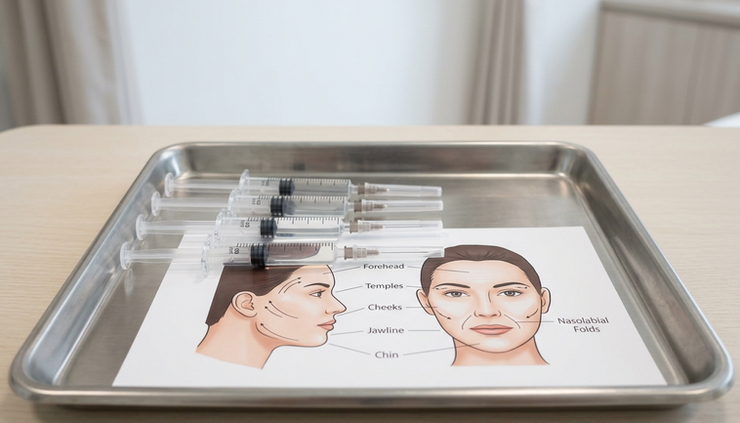
The main Revance filler options and where they may help
Each filler in the RHA Collection has a different personality. A skilled injector does not choose one product for every feature. They match the product to tissue depth, movement, skin thickness, and the type of correction needed.
RHA Redensity supports delicate refinement
RHA Redensity is often associated with fine lines around the mouth, especially dynamic perioral lines. These lines can appear when speaking, smiling, drinking through a straw, or pursing the lips.
This kind of area needs caution. Too much filler around the mouth can look puffy or stiff. A softer, more flexible product can help improve fine creasing while preserving natural movement.
In a facial balancing plan, this may be useful when the lower face appears aged not because of major volume loss, but because of fine texture changes. Small refinements can make the mouth area look smoother without changing the natural lip shape.
RHA 2 can address soft movement and early folds
RHA 2 is often used where a gentle touch is needed. It can help soften dynamic lines and moderate folds while keeping expression natural.
For facial balancing, a provider might consider a softer product when treating areas that move frequently. Smile lines, mild creases, and subtle transition zones often benefit from flexible correction rather than firm structure.
RHA 2 may fit patients who want a low-key improvement and are not looking for obvious contour changes. It can be especially helpful when the goal is freshness, not reshaping.
RHA 3 offers more support for moderate correction
RHA 3 sits in a middle range. It may be chosen when folds or contour needs are more noticeable, but the treatment area still requires flexibility.
For example, deeper smile lines may need more support than a very soft filler can provide. At the same time, the nasolabial fold is not a static crease. It moves with every smile, laugh, and expression. A product that can support tissue while adapting to movement can be useful in that setting.
In balancing work, RHA 3 may play a role in the middle face or around folds that pull attention away from the whole face. The intent is not to erase every line. A face with no folds at all can look unnatural. The better goal is to soften harsh transitions.
RHA 4 can provide stronger contour support
RHA 4 is the more supportive option in the collection. It may be considered when the plan calls for more structure, lift, or contour in selected areas.
Facial balancing often depends on support points. If the midface lacks volume, the lower face may look heavier. If the chin is under-projected, the lips or nose may appear more prominent than they are. If the jawline lacks definition, shadows around the lower face can become more noticeable.
A firmer HA filler may help create structure in appropriate candidates. Placement depth, technique, and anatomy matter as much as product selection. In structural areas, conservative treatment is still the safest aesthetic choice. Overbuilding the face can age a person just as much as volume loss can.

Why natural facial balancing depends on more than filler choice
The best product cannot make up for poor planning. Natural results depend on diagnosis, anatomy, technique, and dose.
A good assessment looks at the face from the front, side, and three-quarter view. It also includes movement. The injector may ask the patient to smile, speak, frown, and relax the face. Static photos do not tell the full story.
Several factors guide a treatment plan.
Bone structure
The cheekbones, jaw, chin, and orbital area create the frame of the face. Filler can support and contour, but it does not replace surgical changes when major structural shifts are desired.
Soft tissue quality
Skin thickness, elasticity, fat distribution, and collagen loss affect how filler behaves. Thin skin may show product more easily. Heavier tissue may need support from deeper placement rather than superficial filling.
Facial movement
Dynamic areas need flexibility. Around the mouth, cheeks, and smile lines, the filler must move with expression. Products that are too firm or poorly placed can look unusual during speech or smiling.
Aging pattern
Some faces lose volume high in the cheeks. Others show early heaviness along the jawline. Some people mainly notice fine lines or hollowing. A balanced plan treats the cause of the concern, not only the visible crease.
Personal style
Natural means different things to different people. Some prefer a refreshed look that others cannot identify. Others want more visible contour in the lips, cheeks, or jawline. The safest plan still respects facial proportion.
Common treatment areas in a facial balancing plan
A balanced injectable plan often uses small amounts in more than one place rather than a large amount in one area. That approach can create a softer, more complete result.
Midface and cheeks
The cheeks are not just about cheekbones. Midface support can affect the under-eye transition, smile lines, and lower face shadows.
When the cheeks lose volume, the face may look tired even after rest. Thoughtful support can create a lifted look without a sharp or overfilled appearance. The goal is usually gentle restoration, not dramatic cheek projection.
Smile lines
Nasolabial folds are normal. They should not disappear completely. Yet deep folds can create heaviness around the mouth.
A provider may treat the fold directly, support the cheek above it, or combine both strategies. Treating only the fold can sometimes create bulk. Supporting the area above may reduce tension and improve the transition more naturally.
Chin and jawline
The chin has a strong effect on profile balance. A slightly recessed chin can make the lips or nose look more prominent. Subtle chin support may improve the side profile and lower face proportion.
Jawline treatment requires restraint. The goal is often cleaner definition, not a sharply sculpted look. Too much filler can make the lower face appear wide or heavy.
Lips and mouth area
Lip filler is not only about size. It can improve hydration, border definition, vertical balance between upper and lower lip, and support around the corners of the mouth.
For facial balancing, lips should match the face. A fuller lip may look beautiful on one face and distracting on another. The best lip work tends to preserve natural expression and avoid stiffness.
Fine lines and skin transitions
Some concerns are not true volume problems. Fine lines around the mouth or lower face may call for very gentle correction, skin treatments, neuromodulators, or a mix of options.
Revance is also associated with DAXXIFY, a neuromodulator, but neuromodulators are not fillers. They relax targeted muscles, while fillers add support or volume. In some facial balancing plans, the two categories can complement each other when used appropriately.
What to expect from a consultation and treatment plan
A strong consultation should feel measured and specific. The injector should explain what they see, what they recommend, and what they would avoid.
A responsible plan often includes:
A full facial assessment from multiple angles
A review of medical history, allergies, and prior filler
Discussion of goals and comfort with subtle versus visible change
Product selection based on anatomy and movement
A staged plan when several areas need treatment
Clear aftercare instructions and follow-up timing
Staging matters. Trying to complete every balancing goal in one visit can lead to swelling, overcorrection, or rushed decisions. Many natural-looking outcomes happen over time, with reassessment after swelling has settled.
Patients should also understand common side effects. Temporary swelling, bruising, tenderness, redness, and asymmetry can happen after filler. Rare but serious complications, including vascular occlusion, require prompt medical attention. This is one reason to choose a properly trained medical provider who understands facial anatomy and has safety protocols in place.

How to keep results subtle and balanced
Natural facial balancing takes discipline from both the provider and the patient. The most elegant results often come from small changes that work together.
Here are practical ways to keep filler results refined.
Start with the highest impact area
The area that bothers someone most is not always the area that needs treatment first. For example, smile lines may improve more from cheek support than from direct filling.
Use the right amount
More filler does not always create more beauty. Small, well-placed amounts can improve proportion without changing facial identity.
Respect movement
A face should still look like itself when smiling, laughing, and speaking. Flexible fillers and skilled placement help preserve expression.
Avoid trend-based treatment
Trends change quickly. Facial anatomy does not. A treatment that suits the individual face will age better than one copied from a photo.
Plan maintenance before adding more
HA fillers last for varying lengths of time based on product, placement, metabolism, and treatment area. Before adding volume, a provider should assess what remains from past treatments.
The real value of Revance options in facial balancing
Revance fillers give skilled injectors a range of textures and support levels. That range matters because a balanced face is not built with one approach. Fine lines, folds, contours, and support points each need a different strategy.
The RHA Collection stands out because it was created with facial movement in mind. That makes it especially relevant for areas where expression is constant, such as the mouth, cheeks, and smile lines. When used thoughtfully, these fillers can help soften, support, and refine without creating a stiff or overdone look.
The best results still come from the person holding the syringe. Product choice is only one part of the plan. Anatomy, restraint, safety, and taste shape the final outcome.
A natural-looking face does not announce the treatment. It simply looks more balanced, more rested, and fully expressive.


Comments